Study in Thailand 2026: The Complete Guide to 8 Top Universities (With Real Costs & Student Life)
Your Complete Guide to Studying for a Bachelor's Degree in Thailand
Sawadee khrup. It’s Monchai again. My niece, Sa, will graduate next year from a U.S. high school, and she's now exploring the idea of earning her bachelor's degree in Thailand. Watching her navigate all the options made me realize something: a lot of international students (and parents!) are asking the same questions she's asking.
So, I've put together this in-depth guide to help you understand Thailand's top universities, what kind of programs they offer, what student life is like, and how to choose the right school — even if you haven't picked a major yet. If you or someone you love is thinking about studying in Thailand, this is the starting point I wish Sa had on Day One.
Some Quick Answers
Most affordable university? Kasetsart University (฿50,000-100,000/semester or ~$1,400-$2,800 USD)
Best for engineering? KMUTT or KMITL — strong hands-on programs with industry connections
Most international students? Asian Institute of Technology (60+ nationalities represented)
Best city for first-time expats? Chiang Mai for a calm, creative environment; Bangkok for career opportunities
Total cost per year? ฿100,000-400,000 (~$2,800-$11,200 USD) depending on university — 50-70% less than US/UK/Australia
Why Consider a Thai University as a Foreign Student?
Thailand is becoming increasingly popular for international students, and for good reason:
High-quality education at globally recognized institutions
English-taught international programs across many majors
Significantly lower tuition and living costs — bachelor's degrees cost 50-70% less than US, Europe, Australia, and Singapore
A warm, welcoming culture that's easy to adapt to
A safe environment with excellent food, transportation, and healthcare
A growing international community in major cities like Bangkok and Chiang Mai
If Sa chooses Thailand, she'll join students from across Asia, Europe, the Middle East, Africa, and North America who come here for an affordable, high-quality education with rich cultural experiences.
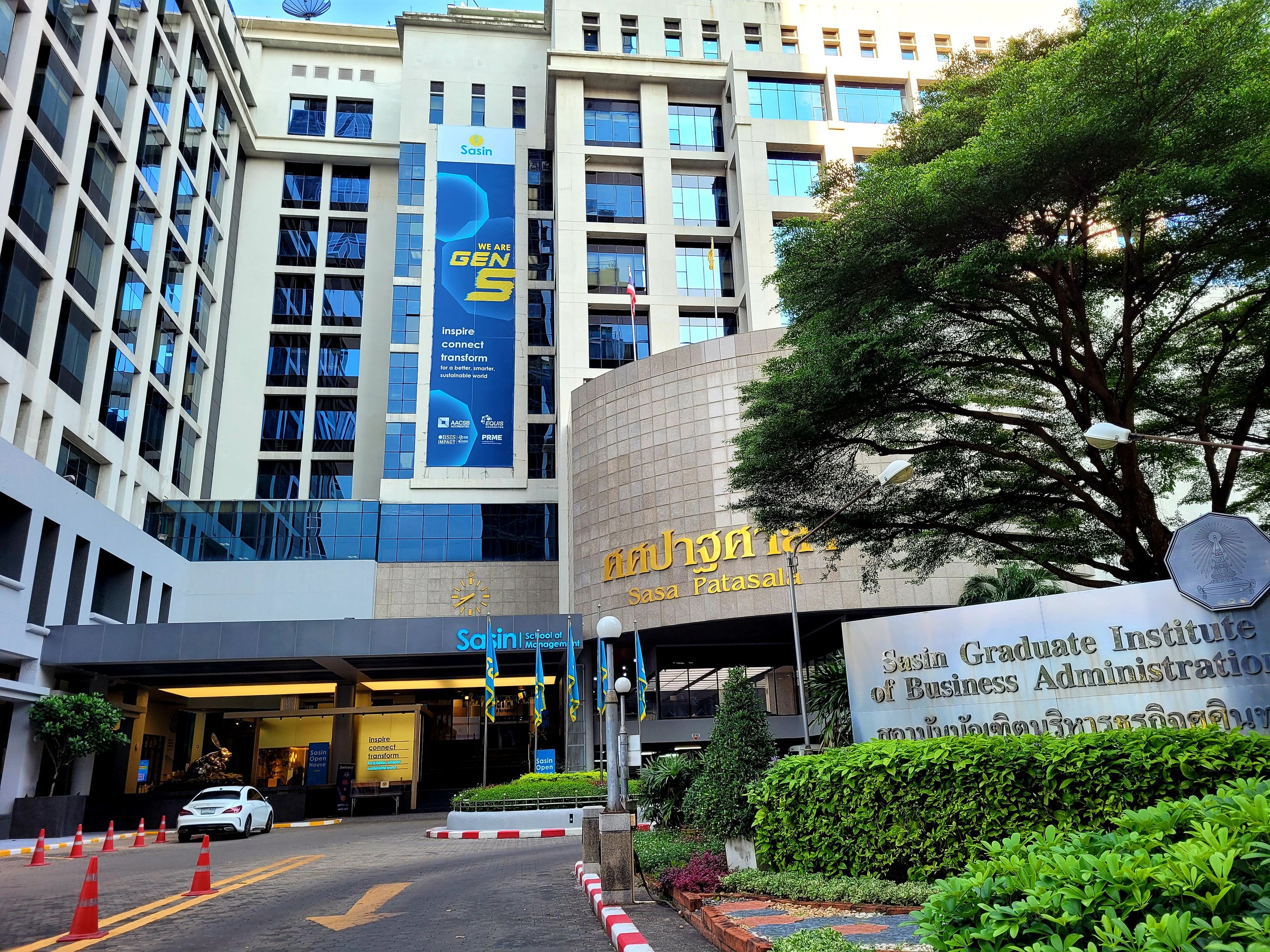
Sasin Graduate Institute of Business Administration at Chulalongkorn University, Bangkok, Thailand. PHOTO: Thailand With Monchai
At a Glance: University Comparison
Before diving into detailed profiles, here's how the top universities compare:
Most Affordable
Kasetsart University (฿50,000-100,000/semester)
KMITL (฿50,000-130,000/semester)
Best for STEM
KMUTT (Engineering, Computer Science, Architecture)
KMITL (Aviation, Robotics, IT)
AIT (Advanced STEM research)
Most Prestigious
Chulalongkorn University (#1 in Thailand, strong employer recognition)
Mahidol University (Top for life sciences and research)
Thammasat University (Famous for service to society and social justice)
Top 8 Universities in Thailand for International Students
Below are the universities I consider the most attractive options for foreign students looking for a bachelor's degree in Thailand. I'll explain strengths, popular majors, typical tuition expectations, and student lifestyle — all written from a parent/mentor perspective.
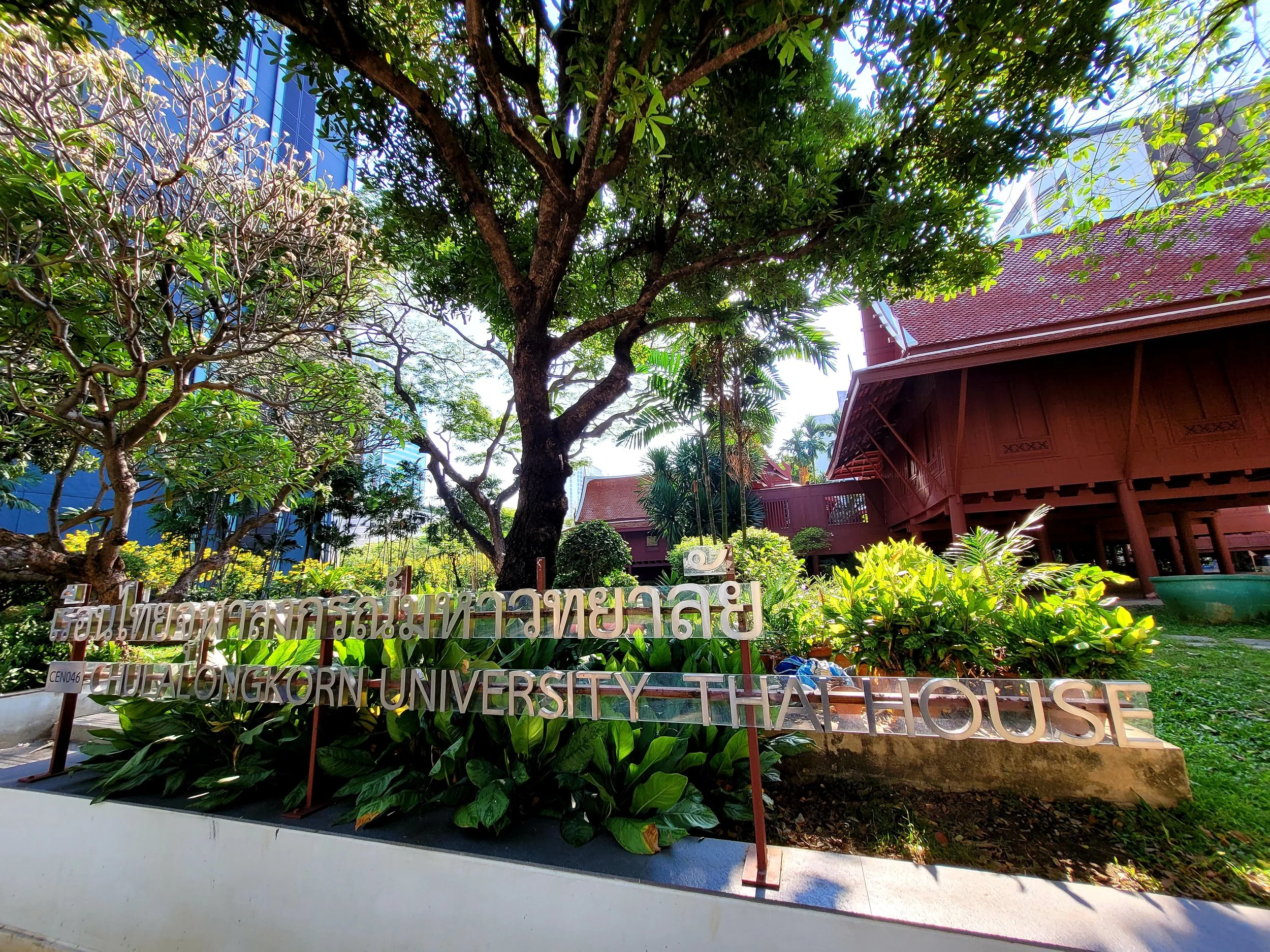
Chulalongkorn University Thai House in Bangkok, Thailand. PHOTO: Thailand WIth Monchai
1. Chulalongkorn University (จุฬาลงกรณ์มหาวิทยาลัย)
Location: Bangkok
Best for: Business, Engineering, International Relations, Economics, Arts, Communication
Why it stands out: Chulalongkorn is widely regarded as Thailand's #1 university. Employers recognize it. Graduate schools respect it. Parents trust it.
International programs (examples):
Bachelor of Business Administration (MBA also available)
Communication Management
Economics
Engineering
Psychological Science
Tuition estimate:
Approximately ฿70,000–141,500 per semester (~$2,000-$4,000 USD) depending on the program (public university rates vary by faculty; some programs may be higher).
Who this fits:
Students who want a top-tier, competitive academic environment and don't mind living in the heart of Bangkok.
Fun fact: “Chula” has a ton of green spaces that’s perfect for some cardio and needed breaks from classes. So, treat yourself to this lovely campus vibe.
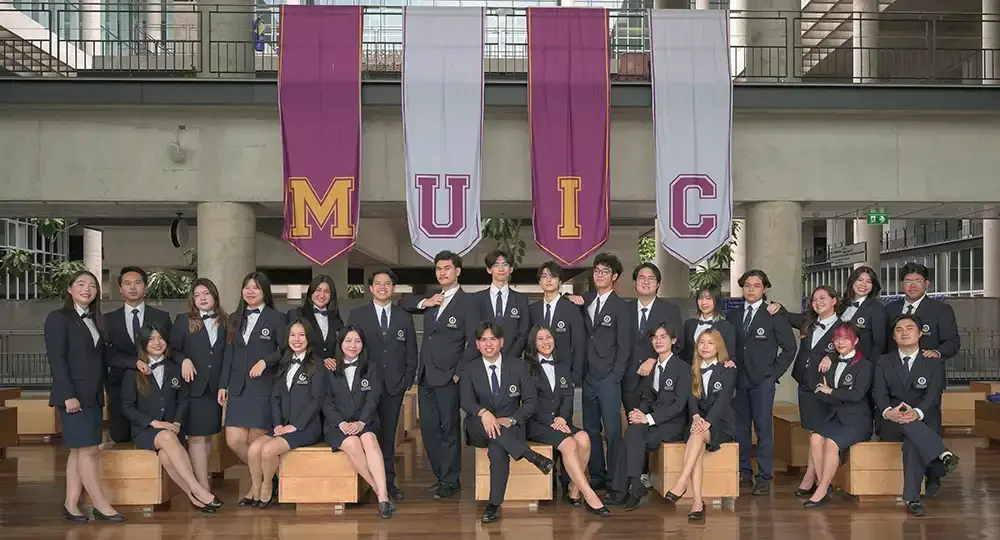
Members of Mahidol University Student Association, Bangkok, Thailand. PHOTO: https://muic.mahidol.ac.th/eng/student-life/students-activities/muic-student-association/
2. Mahidol University (มหาวิทยาลัยมหิดล)
Location: Salaya (just outside Bangkok)
Best for: Life Sciences, Public Health, Music, Computer Science, International Studies
Why it stands out: Mahidol is well-known for its research and strong reputation in health sciences.
International programs (MUIC):
Biological Sciences
Computer Science
International Business
Media & Communication
Food Science
Tuition estimate:
Approximately ฿180,000–220,000 per trimester ($5,000-$6,200 USD) for MUIC (international college).
Important note: MUIC uses a trimester system with 3 terms per year, so annual costs are approximately ฿540,000-660,000 ($15,000-$18,500 USD).
Who this fits:
Students who want a quieter campus but still close to Bangkok, with strong science or arts interests.

Thammasat University students in a class discussion, Bangkok, Thailand. PHOTO: Thammasat University https://oia.tu.ac.th/criteria-and-required-documents/
3. Thammasat University (มหาวิทยาลัยธรรมศาสตร์)
Location: Rangsit & Tha Prachan (Bangkok)
Best for: Social Sciences, Law, Economics, Political Science, Business, Journalism
Why it stands out: Known for its activism, social impact, and academic rigor.
International programs:
Business Administration (BBA)
Economics (BE)
Global Studies
Journalism & Mass Media
Tuition estimate:
Approximately ฿80,000–110,000 per semester (~$2,250-$3,100 USD).
Who this fits:
Students interested in social sciences, international relations, or public policy.
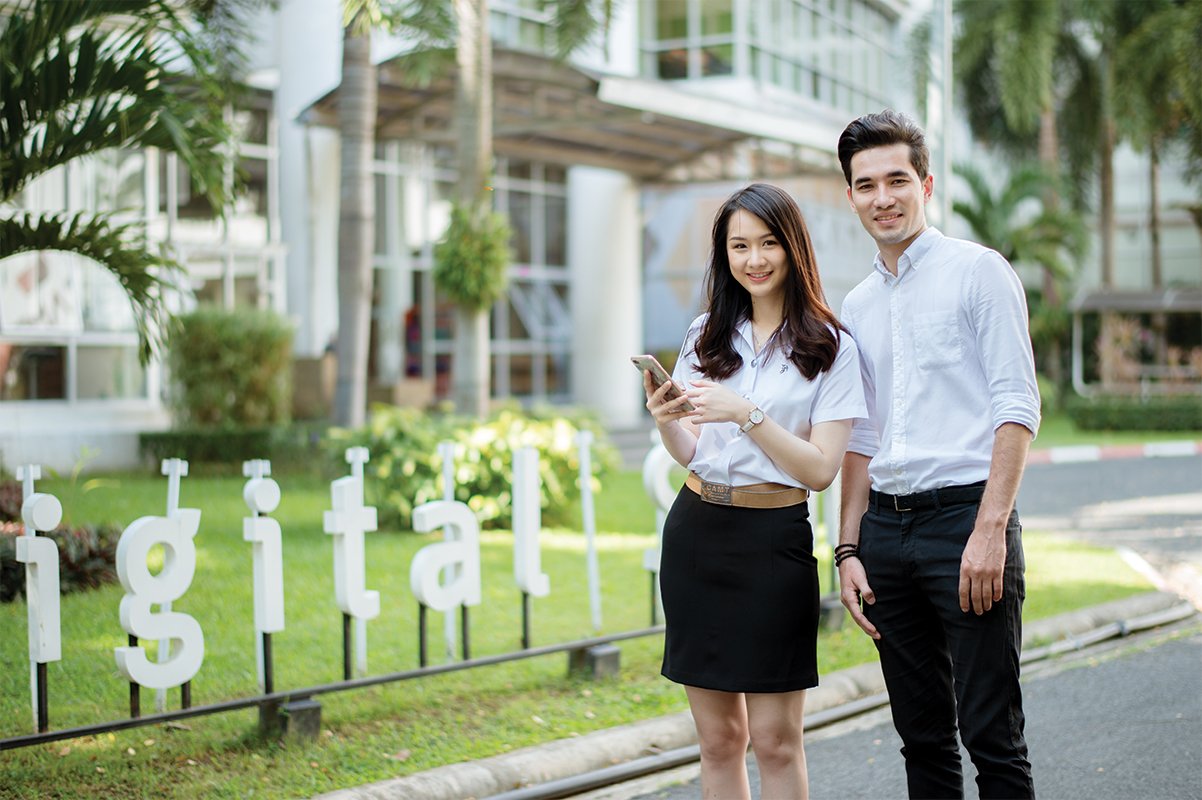
Two Chiang Mai University students standing on campus ground posing for a photo. PHOTO: https://www.cmu.ac.th/en/faculty/the_college_of_arts_media_and_technology/aboutus/head
4. Chiang Mai University (มหาวิทยาลัยเชียงใหม่)
Location: Chiang Mai
Best for: Environmental Science, Tourism/Hospitality, Creative Arts, Engineering
Why it stands out: A peaceful campus surrounded by mountains, lower cost of living, and a lively student-friendly city.
International programs:
Sustainable Development
Tourism
Engineering
Creative Media
Tuition estimate:
Approximately ฿60,000–90,000 per semester (~$1,700-$2,500 USD).
Who this fits:
Students who want a calmer, more relaxed environment outside Bangkok — ideal for first-time expats.
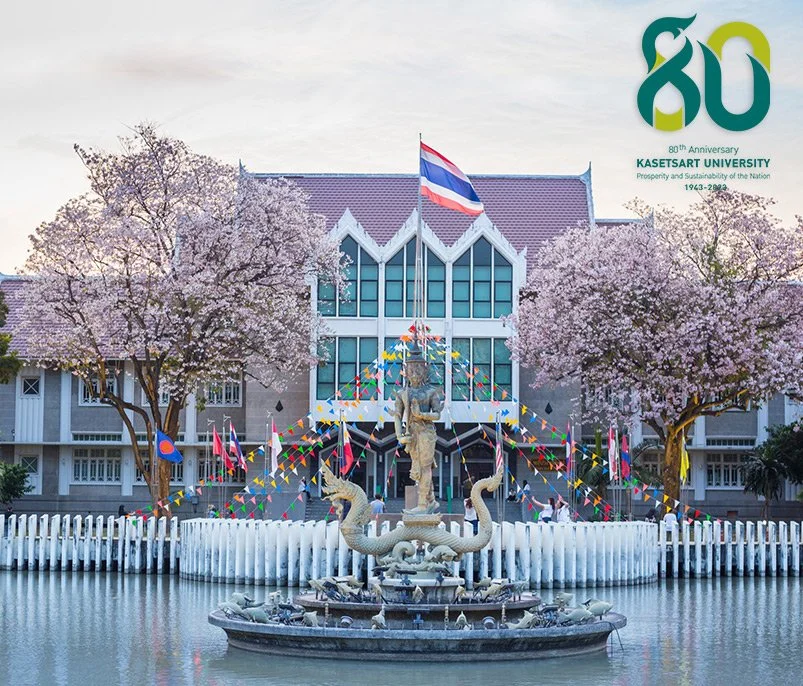
Kasetsart University, Bangkok, Thailand. PHOTO: https://kuic.ku.ac.th/
5. Kasetsart University (มหาวิทยาลัยเกษตรศาสตร์)
Location: Bangkok
Best for: Agriculture, Food Science, Engineering, Business
Why it stands out: Thailand's leading agricultural university — but also strong in engineering, sciences, and business.
International programs:
Agro-Industry
Engineering
Business Administration
Economics
Tuition estimate:
Approximately ฿50,000–100,000 per semester (~$1,400-$2,800 USD).
Who this fits:
Students interested in sustainability, food tech, animal sciences, or engineering fields.

KMUTT Staff. PHOTO: https://www.kmutt.ac.th/en/staff/
6. King Mongkut's University of Technology Thonburi – KMUTT (มหาวิทยาลัยเทคโนโลยีพระจอมเกล้าธนบุรี)
Location: Bangkok
Best for: Engineering, Computer Science, Architecture, Technology
Why it stands out: Tech-focused university with strong hands-on labs and industry connections.
International programs:
Computer Engineering
Mechatronics
Architecture
Software Engineering
Tuition estimate:
Approximately ฿60,000–120,000 per semester (~$1,700-$3,400 USD).
Who this fits:
Students who want strong STEM training in a practical, project-driven environment.

7. King Mongkut's Institute of Technology Ladkrabang – KMITL (สถาบันเทคโนโลยีพระจอมเกล้าเจ้าคุณทหารลาดกระบัง)
Location: Bangkok
Best for: Aviation, Engineering, IT, Robotics
Why it stands out: Home to one of Thailand's strongest engineering and aviation programs.
International programs:
Aviation Engineering
Robotics
Computer Science
Mechanical Engineering
Tuition estimate:
Approximately ฿50,000–130,000 per semester (~$1,400-$3,650 USD).
Who this fits:
STEM students who prefer a modern campus with strong tech specialization.
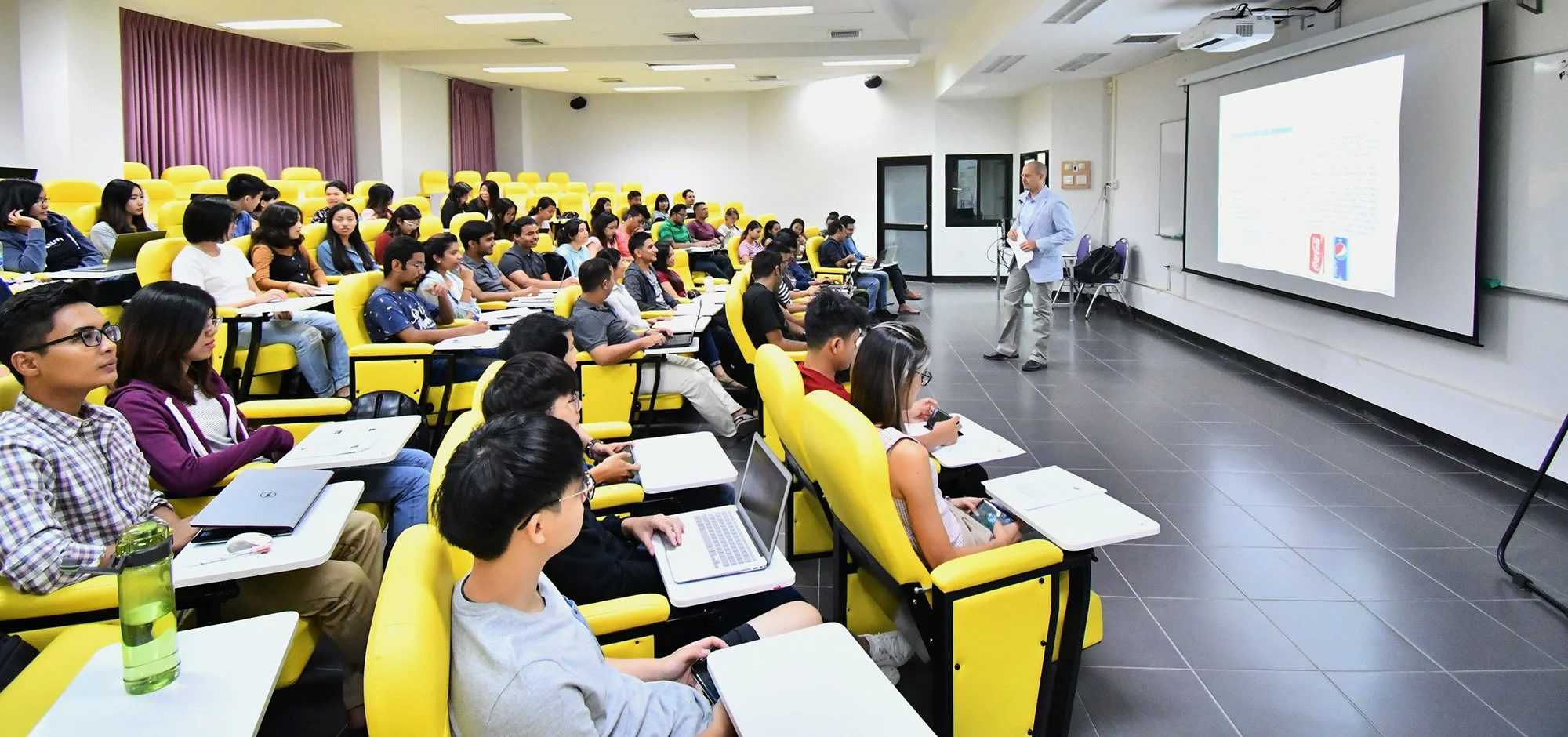
Students sitting in classroom at Asian Institute of Technology, Pathum Thani, Thailand. PHOTO: https://ait.ac.th/
8. Asian Institute of Technology – AIT (สถาบันเทคโนโลยีแห่งเอเชีย)
Location: Pathum Thani (north of Bangkok)
Best for: Advanced STEM, Environmental Engineering, Development Studies, Management
Why it stands out: One of Asia's most international campuses, with 60+ nationalities represented.
International programs:
Primarily graduate programs, but Bachelor of Engineering and Bachelor of Business Analytics programs are available through partner schools.
Tuition estimate:
Higher than typical Thai universities, approximately ฿300,000–500,000 per year (~$8,400-$14,000 USD).
Who this fits:
Serious STEM-focused students who want an international research environment.
Cost Comparison Table (Estimated)
University: Chulalongkorn
Tuition Range (per semester): ฿70,000–141,500 (USD $2,000-$4,000)
City: Bangkok
Notable Strengths: Business, Communications, Economics, Engineering
University: Mahidol (MUIC)*
Tuition Range (per semester*): ฿180,000–220,000 (USD $5,000-$6,200)
City: Bangkok/Salaya
Notable Strengths: Life sciences, Arts, International Studies
University: Thammasat
Tuition Range (per semester): ฿80,000–110,000 (USD $2,250-$3,100)
City: Bangkok
Notable Strengths: Social Sciences, Business, Media Studies
University: Chiang Mai University
Tuition Range (per semester): ฿60,000–90,000 (USD $1,700-$2,500)
City: Chiang Mai
Notable Strengths: Tourism, Creative fields, Environmental Studies
University: Kasetsart
Tuition Range (per semester): ฿50,000–100,000 (USD $1,400-$2,800)
City: Bangkok
Notable Strengths: Agriculture, Engineering
University: KMUTT
Tuition Range (per semester): ฿60,000–120,000 (USD $1,700-$3,400)
City: Bangkok
Notable Strengths: Engineering, Technology
University: KMITL
Tuition Range (per semester): ฿50,000–130,000 (USD $1,400-$3,650)
City: Bangkok
Notable Strengths: Aviation, Robotics
University: AIT
Tuition Range (per year): ฿300,000–500,000/year (USD $8,400-$14,000)
City: Pathum Thani
Notable Strengths: STEM, Environment
*Note: MUIC operates on a trimester system (3 terms per year). Annual costs are approximately ฿540,000-660,000 (~$15,000-$18,500 USD).
Important: Tuition fees updated for 2025/2026 academic year. Always verify current rates on official university websites as fees may change periodically.

Common Concerns Answered
Will my degree be recognized internationally?
Yes. All universities listed here are recognized by Thailand's Ministry of Higher Education and have international accreditation. Chulalongkorn, Mahidol, and Thammasat especially have strong global reputations. Graduates regularly pursue master's degrees at top universities worldwide or work for international companies.
Do I need to speak Thai?
No. All international programs are taught entirely in English. However, learning basic Thai phrases will enrich your experience and help with daily life. Some universities offer Thai language courses for international students.
Is it safe for foreign students?
Absolutely. Thailand is one of the safest countries in Southeast Asia. Universities have 24/7 security, and Bangkok and Chiang Mai are modern cities with excellent public transportation. The culture is extremely welcoming to foreigners.
What about visa requirements?
Universities with international programs provide full support for obtaining a Non-Immigrant "ED" (Education) visa. You'll work with your university's international office, and they can handle most of the paperwork. The process is straightforward and well-established.

How to Choose the Right Thai University (My Framework for Sa)
If Sa were applying today, here's exactly how I'd help her narrow down her list. You can use the same approach.
Step 1: Narrow Down 2–3 Broad Majors
Even if you're unsure, try general directions like:
Business
Computer Science
Engineering
Arts & Communication
Environmental or Sustainability fields
This instantly filters down your school list.
Step 2: Choose Your Campus Lifestyle
Bangkok: Busy, energetic, modern, more internships
Chiang Mai: Calm, creative, low cost
Pathum Thani/Salaya: Campus-centric, quieter, near Bangkok
Step 3: Compare English-Taught Programs
Some universities have full English programs; some only have specific majors. Check:
Curriculum
Industry partnerships
Required internships
Required English proficiency test (IELTS/TOEFL)
Step 4: Match Tuition to Your Budget
Thailand offers options across all budgets — from affordable public universities to premium international campuses.
Step 5: Double-check Visa Support
Universities with strong international programs usually handle student visa paperwork smoothly. That's important for new expats. You can also apply on your own with minimal assistance, but make sure you completely follow the proper application protocol at the immigration office. If I were you, I’d want their help!
Scholarship Opportunities for International Students
One of the best-kept secrets about studying in Thailand? The scholarship opportunities are genuinely accessible — and they can significantly reduce (or even eliminate) your tuition costs.
Government Scholarships
Thailand Government Scholarship 2026
This fully funded program covers tuition, living stipend, accommodation, travel expenses, and health insurance for undergraduate, master's, and doctoral students at various Thai universities. The scholarship supports fields including Engineering, Business, Social Sciences, Medicine, Natural Sciences, and Arts.
Eligibility: Generally between ages 18-35, depending on study level. English proficiency required for most programs.
How to apply: Applications are submitted through the Thai Ministry of Higher Education website and individual universities. Deadlines typically fall between January-March for August intake.
Official website: https://www.ops.go.th/en/inter-scholarships (check for annual updates)
University-Specific Scholarships (Examples)
Chulalongkorn University Undergraduate Scholarships
Chulalongkorn offers fully funded scholarships for both ASEAN and Non-ASEAN students, covering tuition fees, economy-class round-trip airfare, monthly stipend of 16,000 Baht, and accommodation expenses. While primarily for graduate students, the university also offers merit-based partial scholarships for exceptional undergraduate applicants.
Official website: https://www.chula.ac.th/en/academics/admissions/scholarships/ (Check for current opportunities)
Deadline: Typically May 8th for the following academic year
Mahidol University Postgraduate Scholarships
Mahidol offers approximately 50 full scholarships and 450 partial scholarships annually. Type 1 (Full) covers all educational fees plus living allowance. Type 2 (Partial) covers 80% of tuition fees.
For undergraduates: MUIC offers merit-based scholarships for students with exceptional academic records. Look for current opportunities on the official website https://op.mahidol.ac.th/ir/inbound-scholarships/. Or here https://muic.mahidol.ac.th/eng/admissions/scholarships/
Deadline: Typically May 15th
Royal Thai Scholarships at AIT (Postgraduate programs)
The Asian Institute of Technology administers Royal Thai Government scholarships for doctoral and master's students from Thailand and other Asian countries, covering tuition, accommodation, and living expenses for the entire program duration.
Official Website: https://ait.ac.th/financial/royal-thai-government-scholarships/
How to Increase Your Scholarship Chances
Start early: Most scholarship deadlines are 4-6 months before program start
Strong personal statement: Clearly explain your goals and how studying in Thailand aligns with them
Academic excellence: Maintain the highest GPA possible
Demonstrate commitment: Show how you'll contribute to your home country after graduation
Complete documentation: Missing documents are the #1 reason applications are rejected
Where to Find More Scholarships
University websites: Check the "International Students" or "Scholarships" sections
Thai Embassy in your country: Many country-specific scholarships are coordinated through embassies
ASEAN Scholarships: If you're from an ASEAN country, additional regional scholarships are available
Private foundations: Organizations like the Ford Foundation and local Thai foundations offer merit and need-based awards
Pro tip: Don't assume you won't qualify. Many international students are surprised to learn they're eligible for partial scholarships that can reduce tuition by 25-50%.

Application Timeline for Foreign Students
If a student wants to start in August/September, here's a recommended timeline.
6–9 Months Before Intake (November-February for August intake)
Choose potential majors
Make a shortlist of universities
Prepare for English proficiency tests (IELTS/TOEFL)
Gather transcripts & documents
Research scholarship opportunities
4–6 Months Before (February-April)
Apply to universities
Apply for merit scholarships
Prepare personal statements
Submit all required documentation
2–3 Months Before (May-June)
Receive acceptance letters
Pay enrollment deposit
Begin discussing Non-Immigrant "ED" visa paperwork with your choice school and/or the Thai embassy in your home country
Finalize scholarship applications
1-2 Months Before (July)
Book accommodation (on-campus or nearby)
Finalize arrival planning
Attend university orientation sessions (often offered online)
Arrange health insurance
Learn some basic Thai phrases to soften your landing onto your new environment

Resources: Official Links & Application Portals
Having all the right links in one place can save hours of searching. Here are the official application portals and key resources for each university:
University Application Portals
Chulalongkorn University
Main website: https://www.chula.ac.th/en/
International programs: https://www.inter.chula.ac.th
Admissions: https://www.chula.ac.th/en/admissions/
Mahidol University (MUIC)
Main website: https://mahidol.ac.th/en/
MUIC website: https://muic.mahidol.ac.th/eng/
Admissions: https://muic.mahidol.ac.th/eng/admissions/
Scholarships: https://muic.mahidol.ac.th/eng/admissions/scholarships/
Thammasat University
Main website: https://tu.ac.th/en
International programs: https://oia.tu.ac.th/internationalprograms/
Admissions: https://bba.tbs.tu.ac.th/index.php (BBA)
Chiang Mai University
Main website: https://www.cmu.ac.th/
International programs: https://admission.reg.cmu.ac.th/ipas/main/
Kasetsart University
Main website: https://www.ku.ac.th/en
Undergraduate programs: https://kuic.ku.ac.th/undergraduate-programs/
Admissions: https://kuic.ku.ac.th/admission/
Scholarships: https://kuic.ku.ac.th/scholarships/
KMUTT
Main website: https://www.kmutt.ac.th/en/
Undergraduate programs: https://iadmission.kmutt.ac.th/programs/bachelor
Admissions: https://iadmission.kmutt.ac.th/
Scholarships: https://iadmission.kmutt.ac.th/afford/scholarship
KMITL
Main website: https://www.kmitl.ac.th/
International programs: https://oia.kmitl.ac.th/bachelor/
Asian Institute of Technology (AIT)
Main website: https://www.ait.ac.th
Admissions: https://www.ait.ac.th/admissions/
Scholarships: https://ait.ac.th/financial-aid/
Government & Scholarship Resources
Thailand Ministry of Higher Education
Scholarship portal: https://www.ops.go.th/en/inter-scholarships
Official government scholarships: https://mhesi.e-office.cloud/d/8e68add0
Visa Information
How to complete eVisa online application: See my complete guide HERE
Thai Immigration: https://www.immigration.go.th/en/
Find your nearest Thai Embassy: https://www.thaiembassy.org/
More Helpful Resources
Cost of Living Calculator
Numbeo Bangkok: https://www.numbeo.com/cost-of-living/in/Bangkok
Numbeo Chiang Mai: https://www.numbeo.com/cost-of-living/in/Chiang-Mai
Student Communities
"International Students in Thailand" Facebook groups
Reddit: r/Thailand and university-specific subreddits
Various international students in Thailand Youtube channels
English Proficiency Tests
IELTS: https://www.ielts.org
TOEFL: https://www.ets.org/toefl
Pro tip: Bookmark these links and create a spreadsheet to track application deadlines, required documents, and contact information for each university you're considering.
Who Thailand Is a Great Fit For
Students who thrive in Thailand usually share a few characteristics:
Curious about Asian culture
Open-minded and adaptable
Comfortable in lively, urban environments (especially in Bangkok)
Looking for value without sacrificing academic quality
Interested in English-taught programs with strong regional influence
I know I’m bias, but — Thailand is one of the best soft landings for first-time expat students. Safe, modern, and incredibly welcoming. So, what are you waiting for?

Next Steps: Your 7-Day Action Plan
Day 1-2: Read this guide thoroughly and identify 3-4 universities that match your interests and budget.
Day 3: Visit official university websites and explore specific programs. Note application deadlines.
Day 4: Check scholarship eligibility and deadlines. Many close 4-6 months before intake.
Day 5: Register for IELTS or TOEFL if you haven't taken it yet (most universities require 6.0+ IELTS or 79+ TOEFL iBT).
Day 6: Start gathering documents: transcripts, passport copy, recommendation letters, personal statement draft. While you’re at it, read up on other immigration related guides like the eVISA and TDAC requirements.
Day 7: Join online student communities, follow universities on social media, and contact admissions offices with specific questions.
Remember: The journey to studying abroad starts with a single step. Don't wait for everything to be perfect — start researching, start preparing, and start building your future today. Let’s go!
Final Thoughts: Would I Recommend Sa to Study in Thailand?
Absolutely — if she chooses the right program for her goals.
Thailand offers high-quality education, affordable tuition, and a rich cultural experience that can shape a young adult in the best possible ways.
With accessible scholarships that can dramatically reduce costs, assisted application processes, and comprehensive support systems for international students, the barriers to entry are lower than many families expect.
If Sa decides to study here, she’ll earn more than a degree — she'll build independence, confidence, and lifelong connections. As a proud uncle, I approve this (potential) path!
MORE THAILAND RESOURCES:
🎾 Pickleball in Thailand 2026: Complete Guide to Courts, Clubs & Communities
How Expats & Long-Term Visitors Get a Thai Driver's License (Cars & Motorcycles) — 2025 Complete Guide
Best Time to Visit Thailand?: What I Tell My Friends
Bangkok's Hidden Fitness Gem: Your Complete Guide to Cardio Around Chulalongkorn University & National Stadium
Complete Guide to Working in Thailand as a Foreigner (2025): Visas, Work Permits & Legal Requirements
Best Mindfulness Retreats in Thailand for English Speakers Guide, click HERE.
Looking for Bangkok’s best second-hand markets? Check it out HERE.
For Do’s and Don’ts while visiting Thailand, click HERE.
Bangkok Art and Culture Centre (BACC): Your Free Cultural Escape in Siam Area - Complete Visitor Guide
Bangkok’s #1 transportation choice for tourists: BTS Sukhumvit Line (2025 Guide)
Was this content useful? For the latest Thailand living tips, travel hacks, and perhaps retirement blog updates, pop in your email the box below. Let’s explore Thailand together!
And, if you’re ready to explore Thailand for the first time and need my help with your trip itinerary, hit me up HERE. I’m an Independent Travel Advisor of Fora Travel.
Cheers! - Monchai